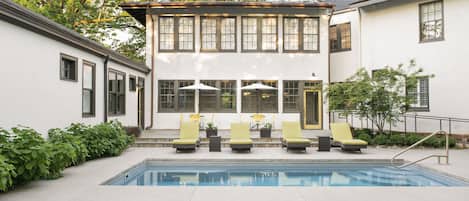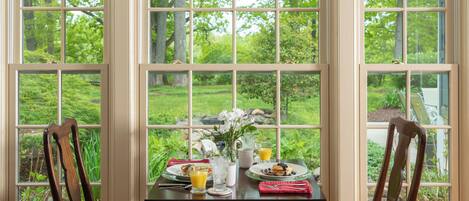
Appartement entier
Triquetra: A Shenandoah Farmstay Retreat
Appartement avec cuisine à Stanardsville
Choisissez des dates pour afficher les prix
Galerie de photos de l’hébergement Triquetra: A Shenandoah Farmstay Retreat
Appartement entier
Commodités populaires
- Cuisine
- Climatisation
- Espace extérieur
- Stationnement disponible
- Vue sur la montagne
Explorez la région
Stanardsville, VA
- Stanardsville Town OfficePlace, Stanardsville Town Office15 min en voiture
- Greene County LibraryPlace, Greene County Library16 min en voiture
- Shenandoah, Entrée Swift Run GapPlace, Shenandoah, Entrée Swift Run Gap20 min en voiture
- Charlottesville, Virginie (CHO-Charlottesville-Albemarle)Airport, Charlottesville, Virginie (CHO-Charlottesville-Albemarle)36 min en voiture
Options de chambre
À propos du quartier
Stanardsville
À Stanardsville .À moins de 10 km de appartement, vous trouverez Parc national de Shenandoah et Greene County Library. Stanardsville Town Office et Green Hills Golf Course se trouvent également à moins de 10 km.
À proximité
- Stanardsville Town Office - 15 min en voiture - 11.6 km
- Greene County Library - 16 min en voiture - 11.6 km
- Greene County Park - 18 min en voiture - 15.0 km
- Shenandoah, Entrée Swift Run Gap - 20 min en voiture - 14.5 km
- Parc national de Shenandoah - 26 min en voiture - 20.3 km
Transport
- Charlottesville, Virginie (CHO-Charlottesville-Albemarle) : à 41 min en voiture
Restaurants
- Maybelle’s On Main - 14 min en voiture
- Sal's Pizzeria & Restaurant - 15 min en voiture
- Bearrr Appetit - 14 min en voiture
- Pupuseria Los Robles - 14 min en voiture
- Family Mexican Restaurant & Latino Store - 14 min en voiture
À propos de cet hébergement
Triquetra: A Shenandoah Farmstay Retreat
Immerse yourself in the beauty and tranquility of Virginia’s Shenandoah foothills, where rolling vineyards, rich history, and peaceful countryside create the perfect retreat.
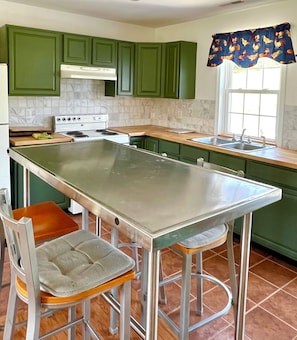
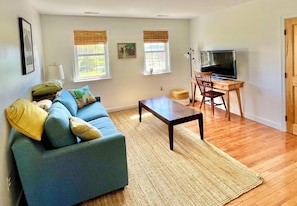
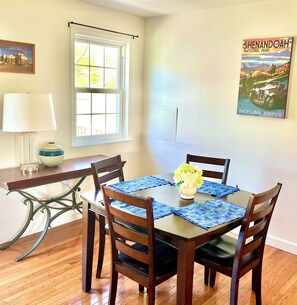
This private apartment comfortably accommodates up to four adults featuring a full kitchen with a spacious prep island, an open-concept living area, a full bath, and a separate bedroom. The living room also includes a queen sofa bed with a memory foam mattress for additional guests.
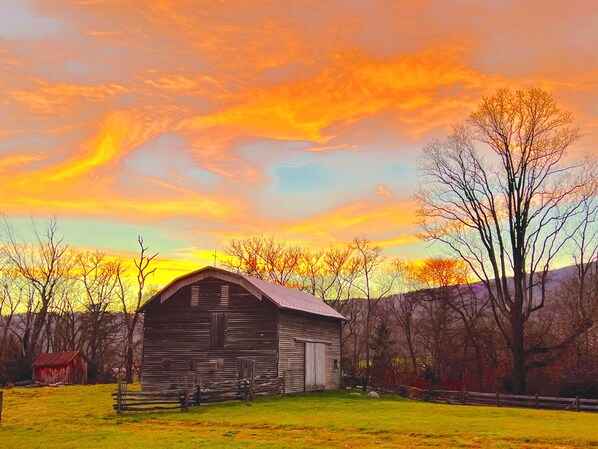
Located on a 170-acre working conservation farm, the property is home to horses, cattle, chickens, and an apiary. Wildlife thrives here, including deer, wild turkey, bobcats, black bears, and dozens of native bird species.
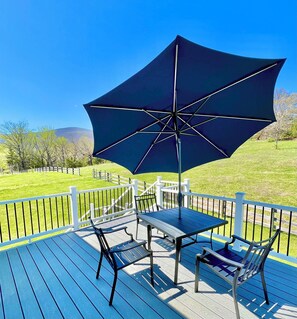
Guests can relax on the 16' x 14' elevated deck overlooking fields and mountains, fish in the two-acre pond, explore more than 110 acres of forest, or simply enjoy the sounds and sights of nature. Spring and summer evenings are especially magical, with fireflies dancing beneath brilliant views of the Milky Way overhead.
The farm is ideally situated near several wineries, Bald Top Brewing Company, and Shenandoah National Park, with the Swift Run Gap and Elkton Entry Run entrances located just 7 miles and 2 miles away.
History enthusiasts will appreciate the nearby homes of Presidents Thomas Jefferson, James Monroe, and James Madison, as well as Jefferson’s architectural masterpiece, the University of Virginia in Charlottesville.
The farm itself is a recognized conservation showplace and recipient of the Clean Farm Award and the Friends of the Rappahannock Stewardship Award. Guests interested in sustainability and regenerative agriculture are welcome to learn about the farm’s ongoing ecological and carbon-conscious initiatives highlighted in the essay below.
Come recharge, reconnect with nature, and experience life on a working conservation farm in the heart of Virginia’s countryside. Your stay will help fund the farm's conservation goals and mission.
Instagram: @triquetrafarmrental
Facebook: triquetrafarmrental
Please note: Entry to the apartment requires climbing an exterior staircase leading to the elevated deck.
Reviving Greene County's Heartland: A Journey of
Sustainable Farm Rehabilitation
Nestled in the rolling hills of Greene County, Virginia, a once-dormant rural farm is blossoming into a beacon of sustainable agriculture and environmental stewardship. This transformation is not just about reviving the land for farming but also about regenerating ecosystems, enhancing biodiversity, and implementing practices that honor both the earth and the community.
At the core of this rehabilitation is a commitment to conservation and soil regeneration. By adopting organic farming methods free from pesticides and synthetic fertilizers, the farm utilizes composting techniques to enrich the soil naturally. This not only boosts crop yields but also enhances carbon capture, playing a small yet significant role in mitigating climate change.
One of the standout projects is the creation of a 2.5-acre pond, meticulously stocked with catfish, bluegill, largemouth bass, and minnows. This aquatic ecosystem has become a thriving habitat, evidenced by the surge in amphibian populations, turtles, and an array of bird species like blue herons, bald eagles, red-tailed hawks, and starlings. The pond serves as a microcosm of the farm's broader mission: to create self-sustaining ecosystems that support diverse life forms.
Biodiversity doesn't stop at the water's edge. By delaying haying schedules, the farm allows ground-nesting birds, small mammals, and insects to flourish. This, in turn, attracts predators such as foxes and bobcats, indicating a healthy and balanced ecosystem. The establishment of an apiary further enhances this biodiversity. Bees not only contribute to the pollination of crops, fruit trees, and native flowering species but also signify the farm's dedication to supporting vital pollinator populations. Establishing pocket meadows supports native and migratory bird populations as well as pollinators.
Water conservation efforts are equally robust. The installation of riparian buffers and cow waterers keeps livestock out of streams, significantly reducing sediment runoff. A new well and installation of six water troughs facilitate rotational grazing. One mile of new fencing was erected to exclude cattle from streams and to divide pastures for rotational grazing. All of these practices minimize nitrogen and phosphorus deposition into waterways that feed into the Chesapeake Bay, contributing to the overall health of this critical watershed. Culverts were added for cattle crossings, ensuring that both farm operations and environmental conservation work hand in hand.
In the last year, reforestation initiatives included planting over 1,300 trees. The tree species include English Walnut, American/Asian Hybrid Chestnut, honey locust, berry bushes, American Persimmon, paw-paw, Aspens, and conifers. The selection promotes species diversification, enhances ecosystems, and provides potential for future income sources. Reintroduction of the American chestnut, once decimated by blight, is a symbol of the farm's role in restoring historical biodiversity. The 110 acres of forest are part of a carbon credit program ensuring forty years of harvest-free growth. Simultaneously, ongoing removal of invasive species revitalizes and protects native flora while aiding control of invasive pests like the invasive spotted lanternfly.
Innovation meets tradition with sustainable practices. A solar energy system generates all the farm's electrical power needs. Vegetable production employs no-till production and biological insect control methods.
The farm's holistic approach demonstrates that environmental responsibility and agricultural productivity are not mutually exclusive. By embracing practices that nurture the land and its inhabitants, the farm is not just rehabilitating itself but also contributing to the well-being of Greene County and beyond.
This journey of rehabilitation is more than an isolated effort; it's a model for sustainable farming practices that other rural communities can emulate. Through dedication, innovation, and a deep respect for nature, this Greene County farm is cultivating a legacy that honors the past while sowing seeds for a sustainable future.
Current projects include plans for a high-tunnel growing operation, pond aeration using wind power, advanced composting systems, continued invasive species removal, pollinator meadows, and a small livestock production.
This private apartment comfortably accommodates up to four adults featuring a full kitchen with a spacious prep island, an open-concept living area, a full bath, and a separate bedroom. The living room also includes a queen sofa bed with a memory foam mattress for additional guests.
Located on a 170-acre working conservation farm, the property is home to horses, cattle, chickens, and an apiary. Wildlife thrives here, including deer, wild turkey, bobcats, black bears, and dozens of native bird species.
Guests can relax on the 16' x 14' elevated deck overlooking fields and mountains, fish in the two-acre pond, explore more than 110 acres of forest, or simply enjoy the sounds and sights of nature. Spring and summer evenings are especially magical, with fireflies dancing beneath brilliant views of the Milky Way overhead.
The farm is ideally situated near several wineries, Bald Top Brewing Company, and Shenandoah National Park, with the Swift Run Gap and Elkton Entry Run entrances located just 7 miles and 2 miles away.
History enthusiasts will appreciate the nearby homes of Presidents Thomas Jefferson, James Monroe, and James Madison, as well as Jefferson’s architectural masterpiece, the University of Virginia in Charlottesville.
The farm itself is a recognized conservation showplace and recipient of the Clean Farm Award and the Friends of the Rappahannock Stewardship Award. Guests interested in sustainability and regenerative agriculture are welcome to learn about the farm’s ongoing ecological and carbon-conscious initiatives highlighted in the essay below.
Come recharge, reconnect with nature, and experience life on a working conservation farm in the heart of Virginia’s countryside. Your stay will help fund the farm's conservation goals and mission.
Instagram: @triquetrafarmrental
Facebook: triquetrafarmrental
Please note: Entry to the apartment requires climbing an exterior staircase leading to the elevated deck.
Reviving Greene County's Heartland: A Journey of
Sustainable Farm Rehabilitation
Nestled in the rolling hills of Greene County, Virginia, a once-dormant rural farm is blossoming into a beacon of sustainable agriculture and environmental stewardship. This transformation is not just about reviving the land for farming but also about regenerating ecosystems, enhancing biodiversity, and implementing practices that honor both the earth and the community.
At the core of this rehabilitation is a commitment to conservation and soil regeneration. By adopting organic farming methods free from pesticides and synthetic fertilizers, the farm utilizes composting techniques to enrich the soil naturally. This not only boosts crop yields but also enhances carbon capture, playing a small yet significant role in mitigating climate change.
One of the standout projects is the creation of a 2.5-acre pond, meticulously stocked with catfish, bluegill, largemouth bass, and minnows. This aquatic ecosystem has become a thriving habitat, evidenced by the surge in amphibian populations, turtles, and an array of bird species like blue herons, bald eagles, red-tailed hawks, and starlings. The pond serves as a microcosm of the farm's broader mission: to create self-sustaining ecosystems that support diverse life forms.
Biodiversity doesn't stop at the water's edge. By delaying haying schedules, the farm allows ground-nesting birds, small mammals, and insects to flourish. This, in turn, attracts predators such as foxes and bobcats, indicating a healthy and balanced ecosystem. The establishment of an apiary further enhances this biodiversity. Bees not only contribute to the pollination of crops, fruit trees, and native flowering species but also signify the farm's dedication to supporting vital pollinator populations. Establishing pocket meadows supports native and migratory bird populations as well as pollinators.
Water conservation efforts are equally robust. The installation of riparian buffers and cow waterers keeps livestock out of streams, significantly reducing sediment runoff. A new well and installation of six water troughs facilitate rotational grazing. One mile of new fencing was erected to exclude cattle from streams and to divide pastures for rotational grazing. All of these practices minimize nitrogen and phosphorus deposition into waterways that feed into the Chesapeake Bay, contributing to the overall health of this critical watershed. Culverts were added for cattle crossings, ensuring that both farm operations and environmental conservation work hand in hand.
In the last year, reforestation initiatives included planting over 1,300 trees. The tree species include English Walnut, American/Asian Hybrid Chestnut, honey locust, berry bushes, American Persimmon, paw-paw, Aspens, and conifers. The selection promotes species diversification, enhances ecosystems, and provides potential for future income sources. Reintroduction of the American chestnut, once decimated by blight, is a symbol of the farm's role in restoring historical biodiversity. The 110 acres of forest are part of a carbon credit program ensuring forty years of harvest-free growth. Simultaneously, ongoing removal of invasive species revitalizes and protects native flora while aiding control of invasive pests like the invasive spotted lanternfly.
Innovation meets tradition with sustainable practices. A solar energy system generates all the farm's electrical power needs. Vegetable production employs no-till production and biological insect control methods.
The farm's holistic approach demonstrates that environmental responsibility and agricultural productivity are not mutually exclusive. By embracing practices that nurture the land and its inhabitants, the farm is not just rehabilitating itself but also contributing to the well-being of Greene County and beyond.
This journey of rehabilitation is more than an isolated effort; it's a model for sustainable farming practices that other rural communities can emulate. Through dedication, innovation, and a deep respect for nature, this Greene County farm is cultivating a legacy that honors the past while sowing seeds for a sustainable future.
Current projects include plans for a high-tunnel growing operation, pond aeration using wind power, advanced composting systems, continued invasive species removal, pollinator meadows, and a small livestock production.
Hébergements similaires

English Inn of Charlottesville
The Meadows
English Inn of Charlottesville
The Meadows
- Piscine
- Déjeuner compris
- Animaux de compagnie acceptés
- Stationnement compris
4.6 sur 5, Merveilleux, 2 959 avis
4,6
Merveilleux
2 959 avis
Le prix est de 109 $ CA
109 $ CA
129 $ CA au total
(taxes et frais compris)
Du 18 août au 19 août

Holiday Inn Express & Suites Charlottesville by IHG
Pantops
Holiday Inn Express & Suites Charlottesville by IHG
Pantops
- Piscine
- Déjeuner compris
- Climatisation
- Salle d’entraînement
4.7 sur 5, Exceptionnel, 1 007 avis
4,7
Exceptionnel
1 007 avis
Le prix est de 135 $ CA
135 $ CA
154 $ CA au total
(taxes et frais compris)
Du 26 juill. au 27 juill.

Hyatt Studios Harrisonburg
Harrisonburg
Hyatt Studios Harrisonburg
Harrisonburg
- Déjeuner compris
- Animaux de compagnie acceptés
- Stationnement compris
- Wi-Fi gratuit
4.5 sur 5, Merveilleux, 144 avis
4,5
Merveilleux
144 avis
Le prix est de 130 $ CA
130 $ CA
144 $ CA au total
(taxes et frais compris)
Du 26 juill. au 27 juill.

Virginia Guesthouse Hotel
Lewis Mountain
Virginia Guesthouse Hotel
Lewis Mountain
- Wi-Fi gratuit
- Restaurant
- Climatisation
- Salle d’entraînement
4.9 sur 5, Exceptionnel, 65 avis
4,9
Exceptionnel
65 avis
Le prix est de 226 $ CA
226 $ CA
258 $ CA au total
(taxes et frais compris)
Du 26 juill. au 27 juill.

The Crossroads Inn
North Garden
The Crossroads Inn
North Garden
- Déjeuner compris
- Animaux de compagnie acceptés
- Stationnement compris
- Wi-Fi gratuit
4.9 sur 5, Exceptionnel, 59 avis
4,9
Exceptionnel
59 avis
Le prix est de 259 $ CA
259 $ CA
296 $ CA au total
(taxes et frais compris)
Du 21 juill. au 22 juill.