
Book Exclusive Grunwald Vacation Packages

Choose one or more items to build your trip:

Top Grunwald hotels deals

Don't see what you're looking for?
See all available properties in Grunwald
View all properties
Lowest nightly price found within the past 24 hours based on a 1 night stay for 2 adults. Prices and availability subject to change. Additional terms may apply.

Frequently asked questions

How much are vacation packages to Grunwald?
Adventures are calling in Grunwald, with Travelocity vacation packages starting at just . Providing both flights and hotels, these great deals make it easy to explore all corners of the world.
Where can I get the best vacation package deals for Grunwald?
No matter how you like to travel, Travelocity can help you lock in an unbeatable Grunwald package deal. The only thing you have to do is mix and match from our 400 airlines and 1,000,000 worldwide properties.
Why should I purchase my Grunwald vacation package with Travelocity?
Because you'll never roam on your own if you lock in your trip with us, and we offer 24/7 customer support and top-quality service to boot. Add to that our Price Match Guarantee and countless experiences to pick from. We're here to help you have the vacation of a lifetime.
Can I save money on my Grunwald car rental if I bundle it with my hotel or flight?
Combining your bookings into a Grunwald vacation package will save you a handsome sum. You can choose a car and flight; a flight, hotel and car; or a car and hotel. There's no better way to explore the greater Grunwald area than with your own rental car. You can also add activities and experiences to your Travelocity package.
Where should I stay when visiting Grunwald?
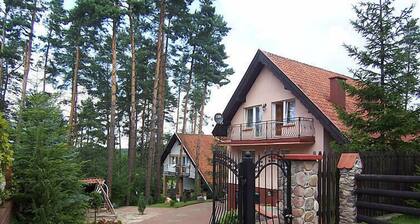
Many people opt to hit the hay at the Vacation in a fabulous stone house surrounded by nature and satisfaction.. It's the perfect base for your Grunwald escape.

Photos of local treasures

Browse Grunwald vacation photos for more inspiration

The Teutonic Knights were defeated at the Battle of Grunwald, on July 15th, 1410.
Founded in the Holy Land in 1190, the Hospitallers of Saint Mary of the Teutons in Jerusalem, or Order of Teutonic Knights, soon moved to Eastern Europe. With the support of the Holy Roman emperors and the papacy, in the 1230s they set out to conquer Prussia east of the River Vistula and to convert its pagan population to Christianity. The Knights cut Poland off from the Baltic and by 1346 they ruled the Baltic coast from the Vistula to Estonia and the Gulf of Finland, which naturally aroused intense opposition from the Poles and Lithuanians. The Poles were already Roman Catholic and in 1386 the Queen of Poland married the Grand Duke of Lithuania, who as part of the deal also became ruler of Poland and accepted Roman Catholicism for his people, removing the Knights’ main justification for their crusading activities.

In July 1410 a Polish-Lithuanian army invaded Prussia and marched towards the Order’s stronghold at Marienburg (now Malbork in Poland). The move took the Knights by surprise and the opposing armies collided near dawn in the fields near the villages of Tannenberg and Grunwald. The Knights were commanded by their Grand Master, Ulrich von Jungingen, the Poles and Lithuanians by their king and their grand duke.

Contemporary accounts of what happened are extremely sketchy, though some chroniclers stressed that the Knights were heavily outnumbered. The Polish-Lithuanian army lined up with the Polish heavy cavalry on the left and the Lithuanian light cavalry on the right. Apparently they were joined by Tatar skirmishers commanded by a former Khan of the Golden Horde and Bohemian warriors under the Hussite leader Jan Zizka. After hours of fierce fighting von Jungingen led a force of Knights he had kept in reserve in a charge against the Poles in the hope of killing the Polish king, but he was killed himself, the charge failed and the Order’s army broke. Some Knights fled to nearby woods and marshes, others retreated to the village of Grunwald, where they organised a defence of wagons tied with chains (in anticipation of the Wild West centuries later). The defence was broken and it was said that the village people had joined in the killing and more bodies were found there than anywhere else on the battlefield.

The Knights held their stronghold of Marienburg itself, but many Prussian castles surrendered to the Poles and Lithuanians. To make peace in 1411 the Order had to pay a substantial indemnity. The Polish- Lithuanian victory marked the beginning of the Teutonic Knights’ decline as a military power and the battle has been ranked ever since as one of the most important in all Polish history.
The Teutonic Knights were defeated at the Battle of Grunwald, on July 15th, 1410.
Founded in the Holy Land in 1190, the Hospitallers of Saint Mary of the Teutons in Jerusalem, or Order of Teutonic Knights, soon moved to Eastern Europe. With the support of the Holy Roman emperors and the papacy, in the 1230s they set out to conquer Prussia east of the River Vistula and to convert its pagan population to Christianity. The Knights cut Poland off from the Baltic and by 1346 they ruled the Baltic coast from the Vistula to Estonia and the Gulf of Finland, which naturally aroused intense opposition from the Poles and Lithuanians. The Poles were already Roman Catholic and in 1386 the Queen of Poland married the Grand Duke of Lithuania, who as part of the deal also became ruler of Poland and accepted Roman Catholicism for his people, removing the Knights’ main justification for their crusading activities.

In July 1410 a Polish-Lithuanian army invaded Prussia and marched towards the Order’s stronghold at Marienburg (now Malbork in Poland). The move took the Knights by surprise and the opposing armies collided near dawn in the fields near the villages of Tannenberg and Grunwald. The Knights were commanded by their Grand Master, Ulrich von Jungingen, the Poles and Lithuanians by their king and their grand duke.

Contemporary accounts of what happened are extremely sketchy, though some chroniclers stressed that the Knights were heavily outnumbered. The Polish-Lithuanian army lined up with the Polish heavy cavalry on the left and the Lithuanian light cavalry on the right. Apparently they were joined by Tatar skirmishers commanded by a former Khan of the Golden Horde and Bohemian warriors under the Hussite leader Jan Zizka. After hours of fierce fighting von Jungingen led a force of Knights he had kept in reserve in a charge against the Poles in the hope of killing the Polish king, but he was killed himself, the charge failed and the Order’s army broke. Some Knights fled to nearby woods and marshes, others retreated to the village of Grunwald, where they organised a defence of wagons tied with chains (in anticipation of the Wild West centuries later). The defence was broken and it was said that the village people had joined in the killing and more bodies were found there than anywhere else on the battlefield.

The Knights held their stronghold of Marienburg itself, but many Prussian castles surrendered to the Poles and Lithuanians. To make peace in 1411 the Order had to pay a substantial indemnity. The Polish- Lithuanian victory marked the beginning of the Teutonic Knights’ decline as a military power and the battle has been ranked ever since as one of the most important in all Polish history.