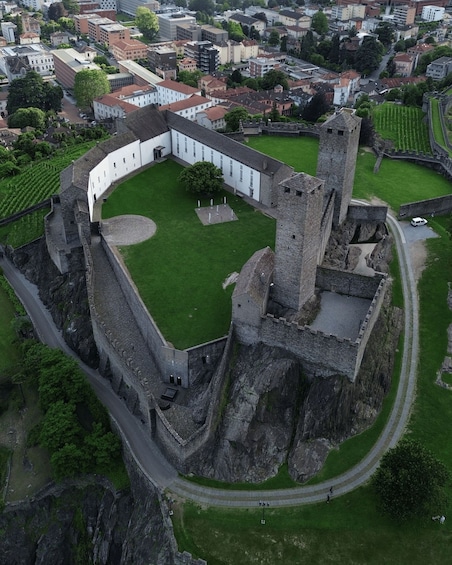
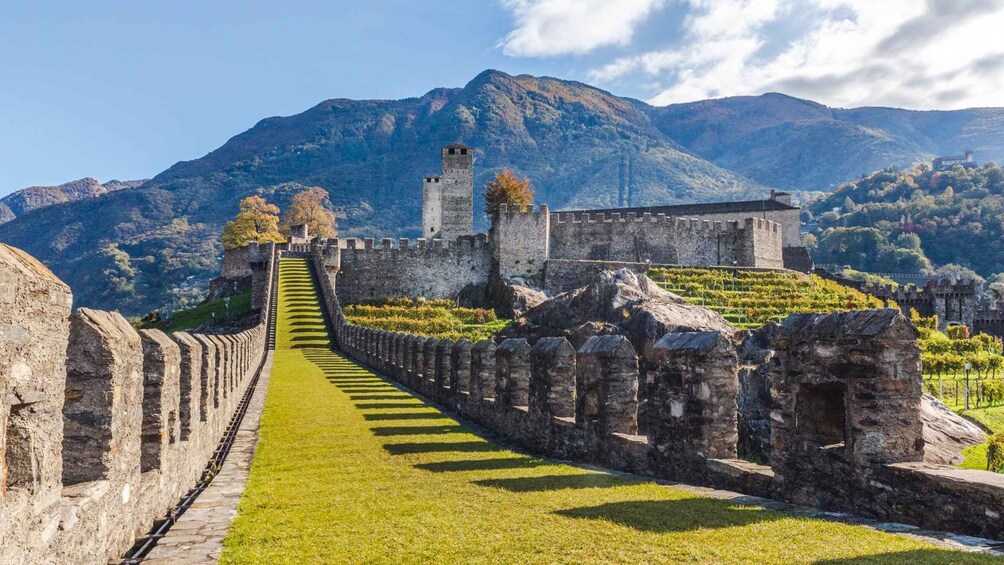
Admission ticket that includes visits to the museum spaces and temporary exhibitions, the two towers and the ramparts.
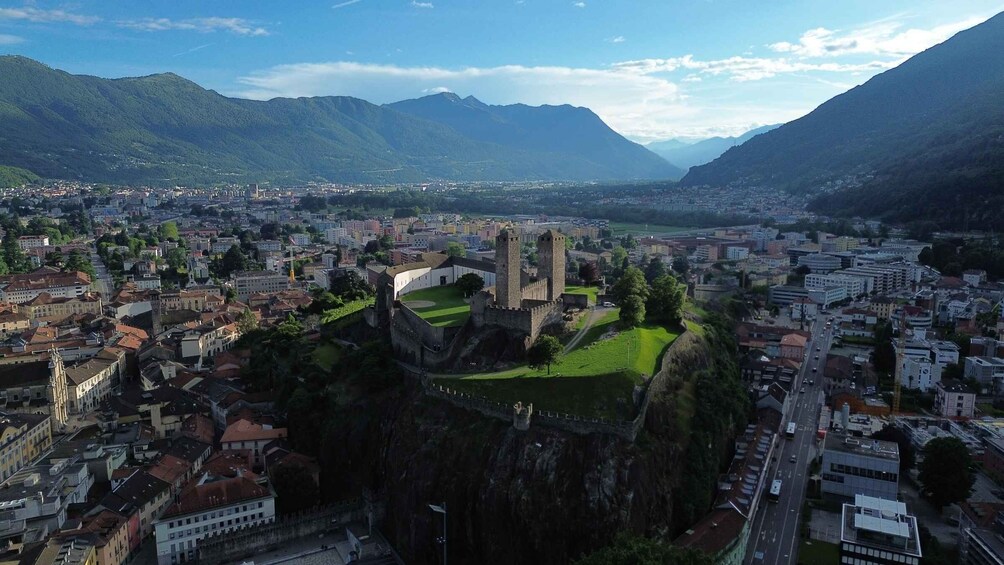
Over the course of its thousand-year history, the hill on which Castel Grande stands has seen numerous phases of settlement, construction and control: evidence of this includes the Neolithic settlements of the 6th millennium BC, the Roman garrisons, the first fortifications of the 4th century AD, the presence of the Lombards and the Franks between the 6th and 8th centuries, and the residence – in the central centuries of the Middle Ages – of the Bishop of Como.
However, the fortified complex that can be seen today dates back to the late medieval period, i.e. between the 13th and the end of the 15th century.
The southern buildings of the castle, now home to the Historical and Archaeological Museum, constituted an area of primary importance as the site of the military garrison. In peacetime, the castellan of the manor resided there, accompanied by at least twenty infantrymen responsible for guarding the castle. Often a garrisoning point for troops sent to Bellinzona in wartime, Castel Grande was intended to be an impregnable space: only those who presented a document bearing the ducal seal were allowed access to the fortified complex.